Materials Included | Begin by reading Nathaniel Hawthorne’s “The May-Pole of Merry Mount” on our site or in your copy of What So Proudly We Hail.
Materials for this guide include background information about the author and discussion questions to enhance your understanding and stimulate conversation about the story. In addition, the guide includes a series of short video discussions about the story, conducted by Yuval Levin (AEI | National Affairs) with the editors of the anthology. These seminars help capture the experience of high-level discourse as participants interact and elicit meaning from a classic American text. These videos are meant to raise additional questions and augment discussion, not replace it.
Learning Objectives | Students will be able to:
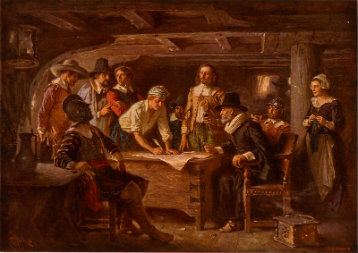
Contrast and compare two guiding ideas of the American republic: the pursuit of happiness (see the Declaration of Independence) and the spirit of reverence (see the Mayflower Compact) as personified in Nathaniel Hawthorne’s “The May-Pole of Merry Mount;”
Read closely to determine what the text says explicitly and to make logical inferences from it;
Cite specific textual evidence when writing or speaking to support conclusions drawn from the text;
Determine central ideas or themes of a text and analyze their development
Summarize the key supporting details and ideas;
Analyze how and why individuals, events, and ideas develop and interact over the course of a text;
Interpret words and phrases as they are used in a text, including determining technical, connotative, and figurative meanings, and analyze how specific word choices shape meaning or tone; and
Analyze how two or more texts address similar themes or topics to build knowledge or to compare the approaches the authors take.
Writing Prompts
Is true love necessary for rich personal happiness? For a fulfilled life? After reading “The May-Pole of Merry Mount,” write an essay that answers the question by defining true love. Support your discussion with evidence from the text.
What does the story suggest is the proper relationship between marriage/family and community—especially in a community like ours, which is based not on ancient traditions and families but on shared ideals and principles? After reading “The May-Pole of Merry Mount,” write an essay that compares the story’s treatment of marriage/family and community with the place of marriage/family in contemporary America, and that argues for one over the other. Be sure to support your position with evidence from the text.
Is there a difference between jollity (or mirth) and genuine happiness (or joy)? If so, what is the difference? Is real happiness compatible with sadness, loss, and suffering? Why or why not? After reading “The May-Pole of Merry Mount,” write an essay that addresses the question and support your position with evidence from the text. Be sure to acknowledge competing views.
About the Author
Nathaniel Hawthorne (1804–64), novelist and short story writer, was born into an old, established New England family in Salem, Massachusetts. His great-great-grandfather, John Hathorne, was one of the judges who presided over the Salem Witch Trials; it is said that young Hawthorne added the “w” to his birth surname, “Hathorne,” to distance himself from this infamous ancestor. Few American authors have written more searchingly and profoundly about the American character. Enduring moral and religious questions, as they emerged in the life of the Puritans and their New England descendants, are the focus of many of Hawthorne’s writings, including his masterpiece, The Scarlet Letter. His marvelously crafted stories also take us deeply into the American soul, with its dark motives, conflicting aspirations, and moral struggles. “The May-Pole of Merry Mount,” one such story, appeared in his first published collection of stories, Twice-Told Tales (1837).
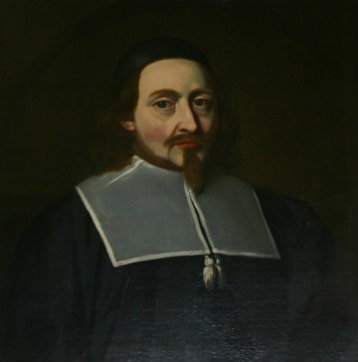
The story is set in Massachusetts around 1630, at the time of the first English colonies in the New World. It depicts an incident in the feud between the Puritans at Salem, under their governor, John Endicott, and a rival settlement called Merry Mount, founded by Thomas Morton. These two settlements represent different stances toward the world. Hawthorne says that “jollity and gloom were contending for an empire,” and that “the future complexion of [New] England was involved in this important quarrel.” The story opens with the people of Merry Mount celebrating round their revered May-Pole. Their wild festivities culminate with the marriage of a youth and a maiden, Edgar and Edith, the lord and lady of the May-Pole. After introducing us to this young couple, Hawthorne, in the middle section of the story, interrupts the story of the wedding to describe the origins of the hedonistic philosophy of Merry Mount, as well as the main features of the Puritans. The third and final section of the story depicts a Puritan raid upon the Merry Mount gathering, just after the marriage had taken place. Endicott and his followers chop down the May-Pole and have its votaries whipped and placed in the stocks. They arrest the high priest of Merry Mount and kill the dancing bear. Most interesting, though, is what happens to the newlywed couple. Endicott, a man of iron, is unaccountably softened by their obvious love and care for one another, and he spares them the punishments that the others receive. Instead, he orders that they be dressed in more modest clothing, Edgar has his hair cut in the “true pumpkin-shell fashion,” and Endicott takes them into the Puritan fold. In the final paragraph, Endicott, the severest Puritan of them all, salvages a wreath of roses taken from the May-Pole itself and places it over the heads of Edith and Edgar.
Section Overview
Said by the author to be a “sort of allegory,” the story depicts an early version of the culture wars, between a party of otherworldly piety or “gloom” (the Puritans) and a party of pleasure or “jollity” (the Merry-Mounters). The cultural struggles between the two outlooks on life appear to be deeply embedded in the American grain.
A. The Merry-Mounters
Describe the scene of the festival around the May-Pole, including their leader, who is likened to Comus (the Greek god of revelry and merrymaking, son and cupbearer to the god Dionysus, or Bacchus, to the Romans, usually depicted as a winged youth or as a child-satyr) (2–4). How is the leader like Comus? What do the festivities tell you about the people of Merry Mount?
What is the May-Pole (5–6)? What does it signify? What does it mean that the Merry-Mounters worship it?
How do the Merry-Mounters live day by day? Why do they live as they do? Why have they embraced “a wild philosophy of pleasure” (5)? Can you defend their view of life?
What is the meaning of the presence of wild animals—and of human beings costumed as half-human/half-animal—at their festival (2)? What is the implicit view of the place of humankind in the natural world?
What does this community produce? Do you think this community will last long given the Merry-Mounters’ free-spirited ways? Why or why not?
Do you think Hawthorne’s description of Merry Mount is realistic and thus serious? Or, do you think the story is a satire?
Video Excerpt 1
WATCH: What are the Merry-Mounters like? What animates them?
B. The Puritans
Looking at page 6, what are the Puritans like? What motivates them?
What do they revere? What is their view of the place of humankind in the natural world?
Why do the Puritans attack Merry Mount (7)? Can you defend what they think and do?
Why the practice of public shaming (the stocks) of wrongdoers (8)? What is the relationship between shame and societal norms? What is the role of shame in a community? Could a community last without shame?
Do you think the Puritan community, as depicted, can last? Why or why not? What does it produce?
Is Hawthorne’s picture of the Puritans satirical or serious? What do we know of the historical Puritans in America? Do they fit Hawthorne’s description?
Video Excerpt 2
WATCH: What are the Puritans like? What animates them?
C. The Young Couple: Edith and Edgar
What is the premonition that Edith and Edgar have just before they are to be married? What is “Edith’s mystery” (4)?
What is their reaction—to each other, and to Endicott—when threatened with punishment?
Are they typical Merry-Mounters, or do they represent something different? If so, what is it?
Do you think Edith and Edgar’s current joy in one another, as described at their wedding, will fade with time?
What is it about them that moves and softens Endicott, the Puritan of Puritans? What is the meaning of the fact that he throws over their heads a wreath taken from the May-Pole? What is meant when this is called “a deed of prophecy” (10)?
Why, when they leave Merry Mount, do they leave without regret (10–11)? Are they now going to become Puritans like the rest? Or are they bringing something new to Puritanville? If so, what?
Video Excerpt 3
WATCH: To which community do the young couple—Edgar and Edith—belong?
Video Excerpt 4
WATCH: What is the meaning of the wreath that Endicott throws over the heads of Edgar and Edith?
D. The Story as “a Sort of Allegory”
What does Hawthorne mean when he says that “the facts . . . have wrought themselves . . . into a sort of allegory” (1)? (Note: An allegory is a literary device in which characters or events represent or symbolize ideas and concepts.) An allegory of what?
We are told that the parties of gloom (the Puritans) and jollity (the Merry-Mounters) were contending for an empire (1).
As presented in the story, would you rather live among the Puritans or among the Merry-Mounters? Why?
Does either party win a clear victory over the other? Or can neither side win unless it incorporates something from the other—or, better, from some third alternative (perhaps represented here by the love of Edith and Edgar)? What should the Puritans learn from the Merry-Mounters? And vice versa? What should both groups learn from Edith and Edgar?
From its earliest beginnings, America has held together two ideas and practices that are often thought to be—and sometimes are in fact—in tension with each other: the spirit of liberty and the spirit of religion. In his Democracy in America, Alexis de Tocqueville attributes both of these spirits to the Puritans, whom he takes to provide the point of departure for the American way of life. Every human community reverences or looks up to something. But not every community encourages the exercise of the rights to life, liberty, and the private pursuit of happiness. Conversely, not all pursuits of private happiness are compatible with a sustainable and decent community, especially where there is a lack of reverence that would support private self-restraint and public morals. The story invites us to consider some of the larger questions about the relation, especially in America, among religion, morality, freedom, and human flourishing. It also invites questions about the place of marriage and family among people who are devoted to the pursuit of individual happiness, on the one hand, and to the glory of Heaven, on the other.
A. Religion and Freedom
For these questions, consider the story in conjunction with the Mayflower Compact and the Declaration of Independence.
Is there anything distinctly American about the confrontation between the two kinds of communities and views Hawthorne describes? Does the contest continue today? If so, how would you describe its present form?
Which provides better support for a society of free, self-governing individuals: a biblical religion like that of the Puritans or nature worship like that of the Merry-Mounters?
Video Excerpt 1
WATCH: Is there anything distinctly American about the confrontation between the two kinds of communities and views Hawthorne describes? Does the contest continue today?
B. Marriage and Community
Is there something uniquely American about the marriage of Edgar and Edith?
What does the story suggest is the proper relationship between marriage/family and community—especially between marriage/family and a community like ours, which is based not on ancient traditions and families but on shared ideals and principles? What is the relationship between the importance of marriage/family and the American celebration of the individual?
If the Merry-Mounters celebrate the body without regard to the soul and the Puritans celebrate the (disembodied) soul without regard to earthly life, is there something in marriage and family that can correct each of these partial and utopian visions?
Does a marriage like that of Edgar and Edith still offer a possible answer to current problems in American society? What are those problems, and that answer, in modern America?
Video Excerpt 2
WATCH: Is there something uniquely American about the marriage of Edgar and Edith?
C. Love and Happiness
Is there a difference between jollity (or mirth) and genuine happiness (or joy)? If so, what is the difference? Is real happiness compatible with sadness, loss, and suffering? Why or why not?
What is the difference between true love and mere sexual enjoyment? Does true love require accepting sadness, loss, and suffering? Why or why not?
Is true love necessary for rich personal happiness? For a fulfilled life?


 (2 votes, average: 4.00 out of 5)
 Loading...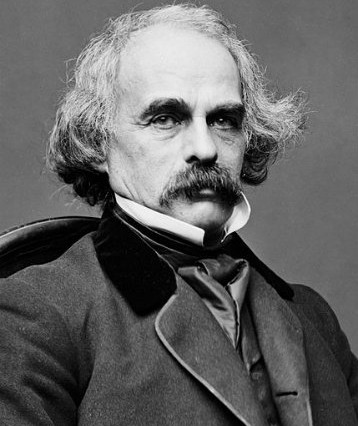

Post a Comment